
Subscribe to our newsletter
Receive the latest updates on sustainability and net zero, plus technical insights and smart product innovation
Subscribe to our newsletter
Receive the latest updates on sustainability and net zero, plus technical insights and smart product innovation



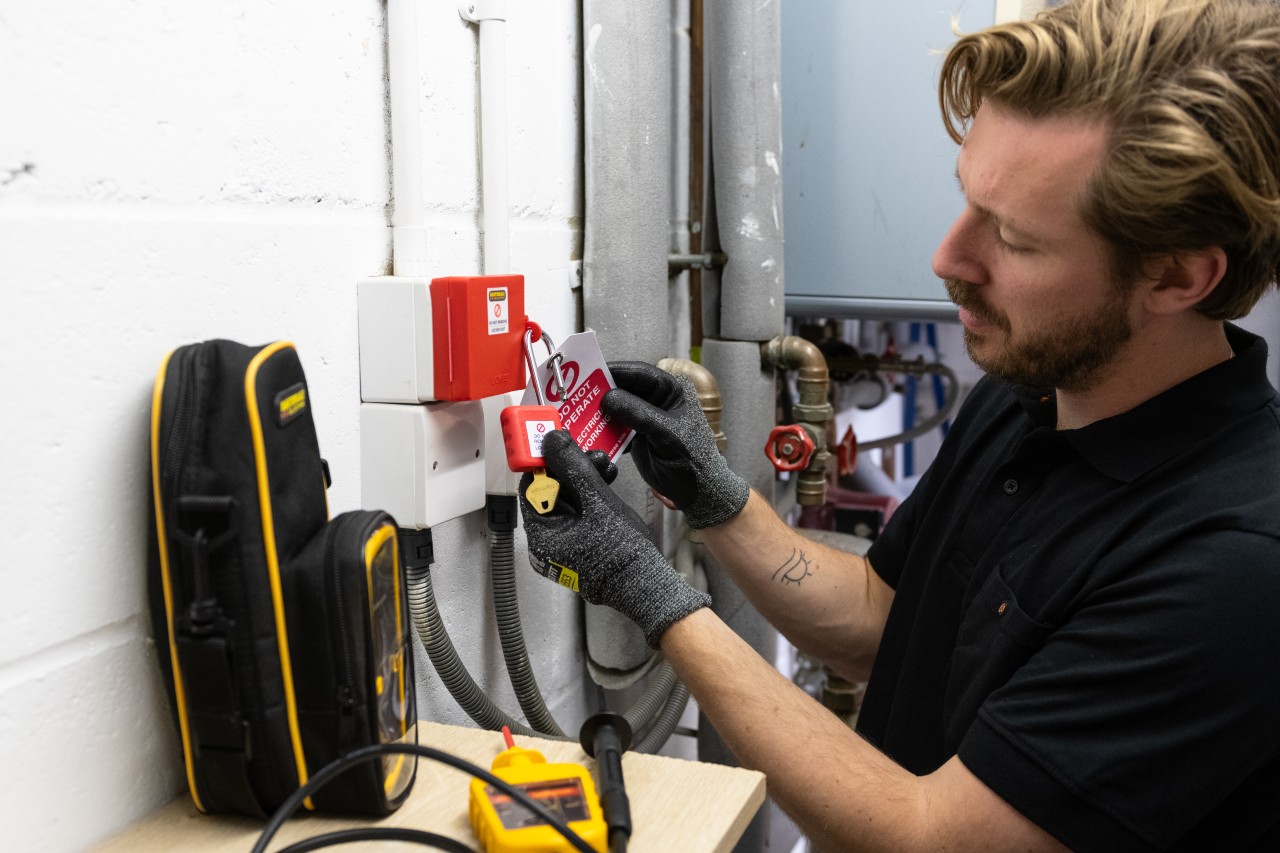
Electrical work can expose workers to a range of hazards, from electric shock and burns to arc flash incidents and unexpected energisation. For anyone undertaking installation, maintenance, inspection or repair work, ensuring that equipment is properly isolated from its energy source is a fundamental part of working safely.
Safe isolation is a well-established principle, and lockout tagout (LOTO) plays a particularly important role in protecting workers. By preventing equipment from being accidentally re-energised while work is in progress, lockout tagout helps create a safer working environment and provides an effective means of controlling hazardous energy.
In this article, we look at what lockout tagout is, why it is important for electrical safety and how it forms part of the wider safe isolation process.
What is lockout tagout?
Lockout tagout (LOTO) is a safety procedure used to ensure that machinery, equipment or electrical systems remain isolated from their energy sources while installation, maintenance or servicing work is being carried out.
Lockout: Locating the relevant electrical isolation point and then applying a physical locking device preventing equipment from being operated or re-energised.
Tagout: Attaching a warning tag or label to clearly indicate that work is taking place and that the equipment must not be operated.
Lockout tagout is only one stage of a safe isolation procedure. Circuits can be mislabelled or could have been modified so checking the circuit to be worked on is truly dead by use of a voltage indicator/ proving unit combination is essential.
Why is lockout tagout essential for electrical safety?
Simply switching off equipment does not always guarantee safety. Electrical systems can sometimes be re-energised unintentionally through human error, poor communication or a lack of clear controls. In some situations, workers may assume equipment has been isolated when hazardous energy is still present.
Lockout tagout helps reduce these risks by providing a physical barrier that prevents isolation devices from being operated until work has been completed.
When implemented correctly, lockout tagout can help:
By ensuring that isolation points remain secure throughout the duration of a task, lockout tagout forms an important layer of protection within any electrical safety programme
How do you ensure the right kit is on site ?
Effective lockout tagout procedures rely not only on training and documentation, but also on having access to the correct equipment. There are a huge number of different lockout items available from many suppliers so ensuring the correct items are available on-site when needed can be challenging.
Electrical test equipment suppliers such as Martindale simplify this by offering application related kits to cover the most common lockout tagout requirements. Some examples are the Martindale LOKKITDOM, a small kit specifically designed for domestic installers, LOKKITGAS1 to help gas installers lockout when working around electricity, and LOKKITPRO, a fully comprehensive lockout kit for both commercial and industrial applications.
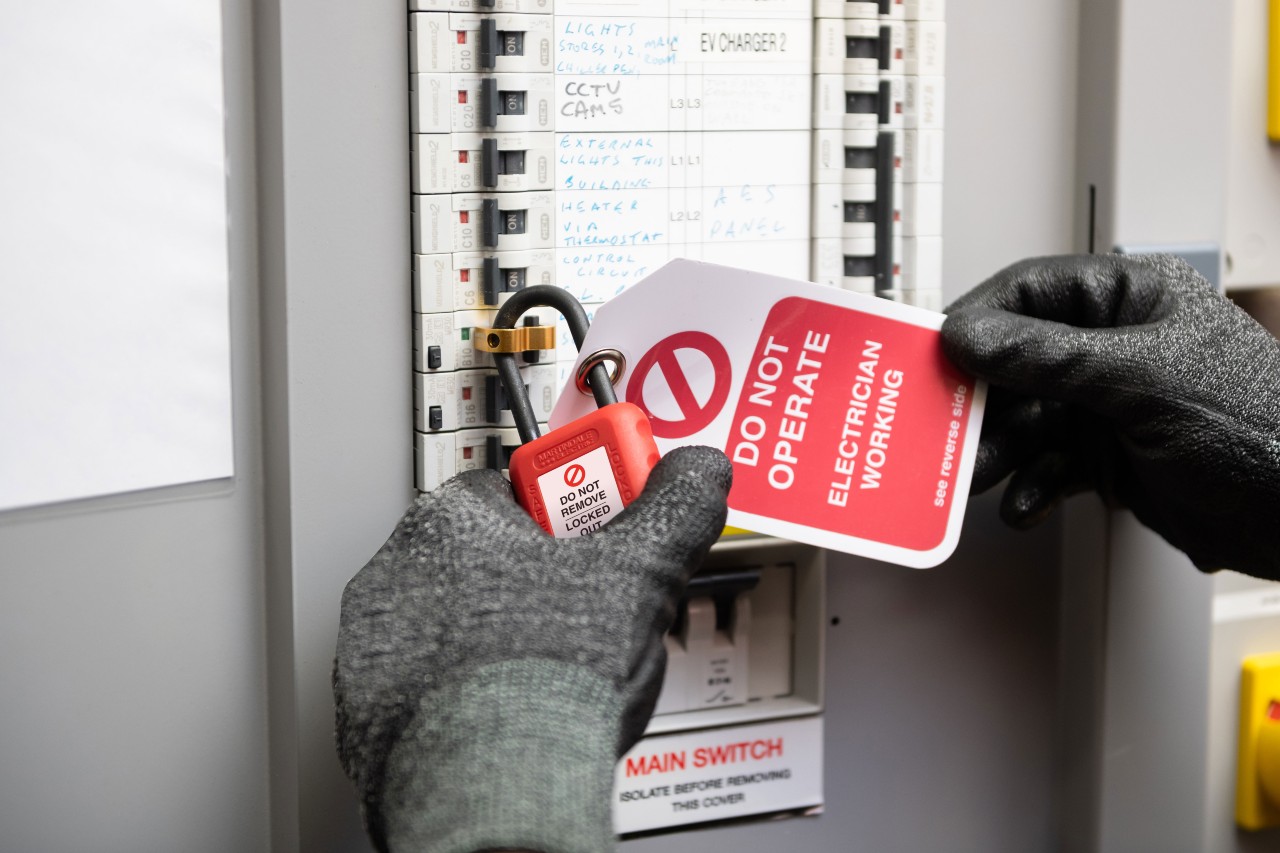
Lockout tagout is only part of the safe isolation process
While safe isolation and lockout tagout are often discussed together, they are not the same thing.
Safe isolation is the overall process used to establish a safe working condition before work begins. Lockout tagout is one of the control measures used within that process to secure isolation points and prevent accidental re-energisation.
A safe isolation procedure should always follow established company procedures, industry guidance, obtaining permissions and performing risk assessments. After the lockout tagout procedure, the process of verifying the circuit is dead by use of a fully compliant voltage indicator and dedicated proving unit is essential. The voltage indicator must be proved to be functioning both prior to, and after checking the potentially live conductor.
Before testing, if there is exposed metal parts cabinets etc, an additional check should be made to carry out a live metal check using a single-pole indicator. This step is critical – especially where wiring faults, diverted currents, or shared neutrals may exist.
Once isolation has been verified and all safety controls are in place, maintenance, inspection or installation work can begin safely.
Common lockout tagout mistakes
Even the most comprehensive procedures can be undermined if lockout tagout practices are not followed correctly. Some of the most common mistakes include:
1. Failing to identify all energy sources
Overlooking a secondary power source, stored energy or interconnected equipment can leave workers exposed to unexpected hazards.
2. Skipping verification steps
Isolation should never be assumed. Verifying that equipment is de-energised remains the most important part of any safe isolation process.
3. Using incorrect lockout devices
Lockout equipment should be suitable for the specific isolation point being secured.
4. Poor communication
Where multiple teams or contractors are involved, clear communication is essential to ensure everyone understands the status of equipment and ongoing work activities.
5. Inadequate training
Workers should be familiar with both the organisation’s lockout procedures and the equipment used to implement them.
Conclusion
Lockout tagout plays a vital role in protecting workers from electrical hazards during maintenance and servicing activities. By preventing accidental re-energisation and supporting effective hazardous energy control, LOTO provides an additional layer of protection within the wider safe isolation process.
When combined with appropriate procedures, training, verification practices and the correct equipment, lockout tagout can help organisations improve electrical safety, reduce risk and create safer working environments for everyone involved.




Subscribe to our newsletter
Receive the latest updates on sustainability and net zero, plus technical insights and smart product innovation